
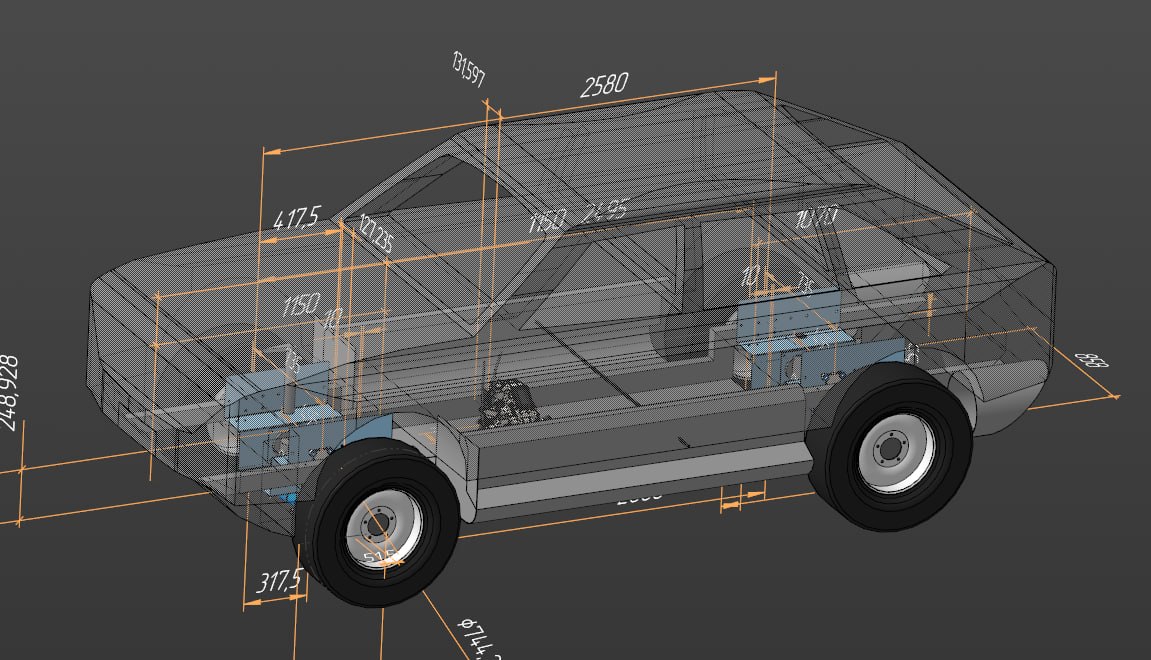
Creating an amphibious vehicle is always an exercise in compromise: boats handle poorly on asphalt, and automobiles are terrible swimmers. The goal of this project was to build an all-wheel-drive expedition vehicle capable of sustaining speeds of 100+ km/h on public roads, while also being able to navigate water and handle rough terrain. The philosophy is straightforward: use a Moskvich (AZLK) 2141 body shell and combine reliable, accessible donor assemblies (an UZAM engine and a Niva drivetrain) with a fully custom, watertight load-bearing steel displacement hull. The approach is to maximize the use of mass-produced stock components and minimize one-off custom parts. The packaging layout must allow straightforward repairs and servicing, while preserving maximum visual resemblance to the good old M2141.
Initial Idea
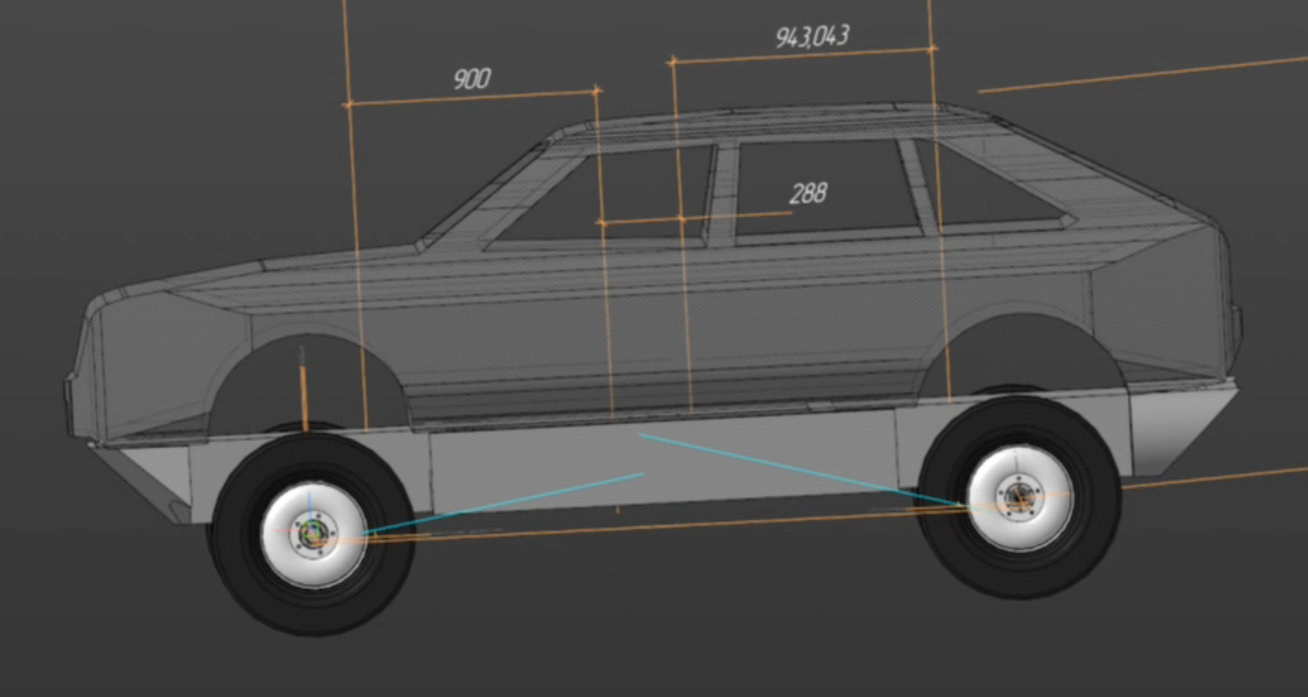
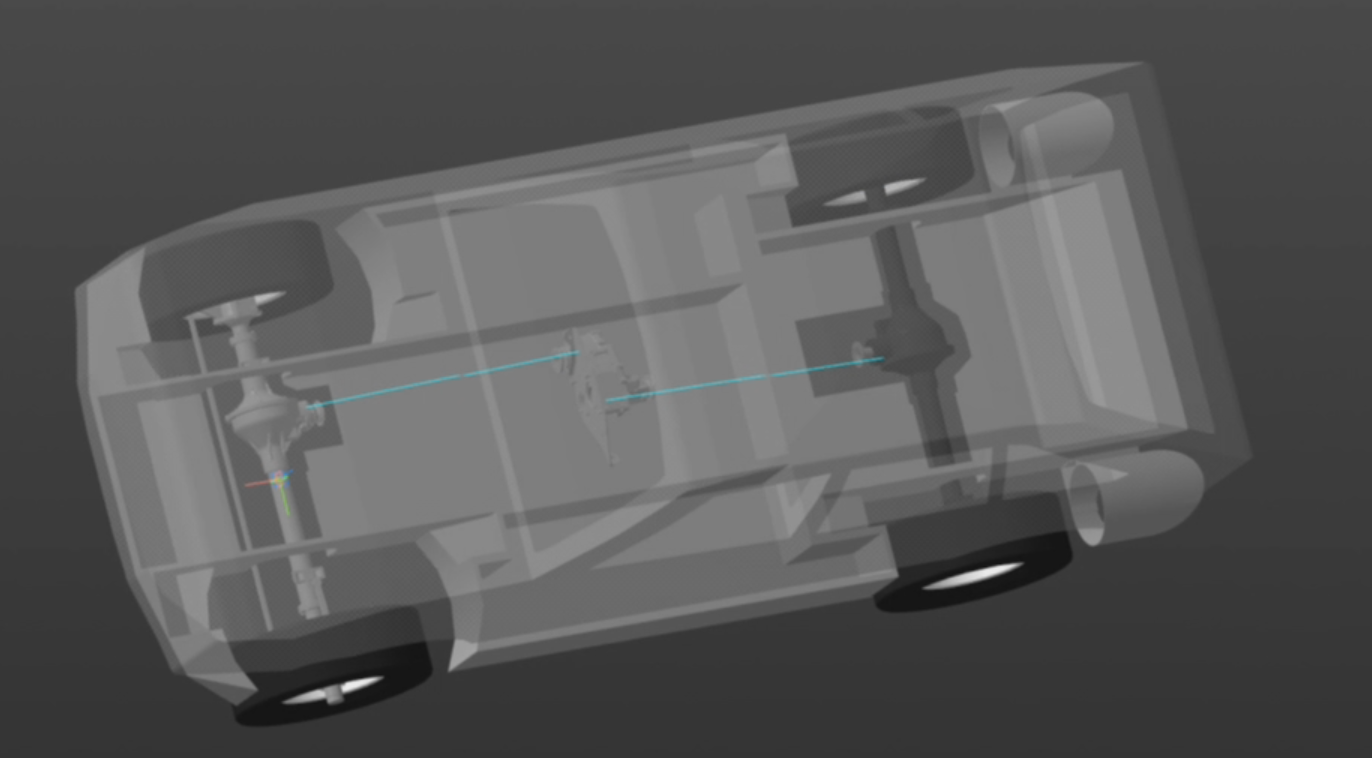
The initial concept was to base the build on UAZ components — simple, reliable, with an enormous margin of safety for such a vehicle (Fig. 1). Toward the end of the calculations, total mass reached approximately 1.7 tonnes, combined with the necessity to cut recesses for driveshafts and solid axles (Fig. 2), which reduced the displacement volume, complicated fabrication, and left protruding solid axles generating substantial hydrodynamic drag. In addition, total vehicle height ended up between 1.7 m and 1.8 m (using a UAZ-469 frame only saved around 50 mm). The vehicle would have turned out heavy, with excessive unsprung mass, a waterline at roughly 40–50 cm, and an appearance far removed from the original M2141 (the body shell is the same, but sits too high relative to the wheels).
Final Concept
Most homebuilt amphibians are painfully slow on public roads. To construct a vehicle suitable for long-distance trips, the decision was made to abandon solid axles in favor of a fully independent suspension derived from the Niva (VAZ-21213). Keeping the mechanics simple and utilizing standard assemblies, the concept ensures that the vehicle remains serviceable using widely available stock parts, while the welded steel hull provides the required buoyancy and rigidity.
The hull resembles a frame with tube-rails and a tub-style skin with a near-flat bottom. The tub provides the primary reserve displacement, while supplementary buoyancy is provided by the M2141 body shell. Estimated weight is approximately 1.4 tonnes.
Engineering Solutions and Calculations
Structural System
The structural core is a custom frame built from rectangular steel tubing of various profiles:
- Upper horizontal frame rails: 60×80×4 mm tubing;
- Vertical fuel risers: 100×100×3 mm tubing;
- Lower horizontal sections forming the bottom, deck, and fuel cells: 140×140×3 mm tubing;
- Smaller tubes interconnect the rails, functioning as fuel balance lines, equipment mounts, and skin supports.
The lower box rails and vertical risers accommodate approximately 80 liters of fuel. Placing this mass lower slightly reduces the center of gravity.
Suspension
Independent front and rear suspensions are built using production front crossmembers from the Niva (VAZ-21213). At the rear, the steering knuckles are locked in a fixed position, allowing the assembly to function as an independent suspension. This turnkey solution ensures parts commonality for repairs and eliminates the risks of designing complex control arm kinematics from scratch. At the same time, rear independent suspension is not an end in itself, but primarily a choice made for the convenience of hull waterproofing.
The result is a fully independent suspension.
Visible downside: short suspension travel of the crossmember compared to the Niva’s stock rear solid axle — approximately 160 mm versus 350 mm. Because of this, the rear suspension is more sensitive to the degree of vehicle loading (payload selectivity).
Drivetrain
A 5-speed transmission (from a Polonez or classic VAZ) is mated to the stock UZAM engine via an adapter plate, driving the transfer case (TC) via a stock Niva intermediate shaft. Propeller power is taken off between the gearbox and the transfer case. The Niva transfer case has a neutral gear: shifting the TC into neutral allows spinning the propeller without rotating the wheels. Propeller driveshaft disengagement is also possible via a belt clutch. In addition, the propeller angle drive gearboxes feature neutral and reverse gears.
Downstream, the stock Niva TC directs motion to the front and rear independent suspension differentials. The rear driveshaft sits at an angle of roughly 15 degrees, making a CV-joint driveshaft practical. A distinctive feature of this drivetrain is that all components from the engine to the differentials are fixed to the hull, so driveshaft operating angles and lengths change only negligibly with suspension travel.
Steering System
Up front, a stock M2141 steering rack transfers motion to the wheel steering arms via vertical steering shafts rotating on bearings (with the lower bearing assembly also serving as a watertight seal). The rear suspension also features vertical steering shafts, currently locked in a static forward position. In future development phases, this allows adding active rear-wheel steering with variable Ackermann geometry, enabling an ultra-small turning radius, rear-axle steering, or crab walk mode.
Because the M2141 wheelbase is longer than that of the VAZ-2121, simply copying the factory steering geometry would yield an Ackermann angle ill-suited for the vehicle. This problem is solved by using a splined connection between the steering arm and the vertical steering shaft: indexing at different angles on the splines allows adjusting the Ackermann angle for the actual wheelbase.
Hull Sealing
The tub construction contains no flexible seals such as rubber boots, bellows, or accordions. Sealing is achieved by metal-to-metal contact via gaskets (differentials to hull tub, steering shaft bearing housings), sealed bearings (steering shafts), and radial shaft oil seals (differentials and axle outputs).
Unlike a damaged flexible boot or torn bellow that creates a direct opening with the risk of rapid flooding, wear of a shaft seal is a localized issue: water encounters the internal cavity of the differential and its breather, without causing direct water ingress into the cabin.
Fabrication Process
The assembly process required solving numerous micro-tasks. For example, mounting steel backing plates for heavy flanged steering shaft bearings (UCFL series) onto the 2-mm hull skin.
Corrosion Protection
- To protect against corrosion inside the structural fuel rails, the metal is coated internally with a specialized fuel-resistant epoxy containing glass flakes (1300 EPOX TANK);
- Certain brackets were made from open C-channel sections, which remain accessible for painting, maintenance, and air drying;
- Enclosed tubes feature access ports for applying cavity anti-corrosion treatments.
Project Status
The vehicle is currently under construction.
The most complex and critical assemblies have been approved and successfully test-fitted for assembly.
One Reply to “Designing and Building a High-Speed Overland Amphibian”